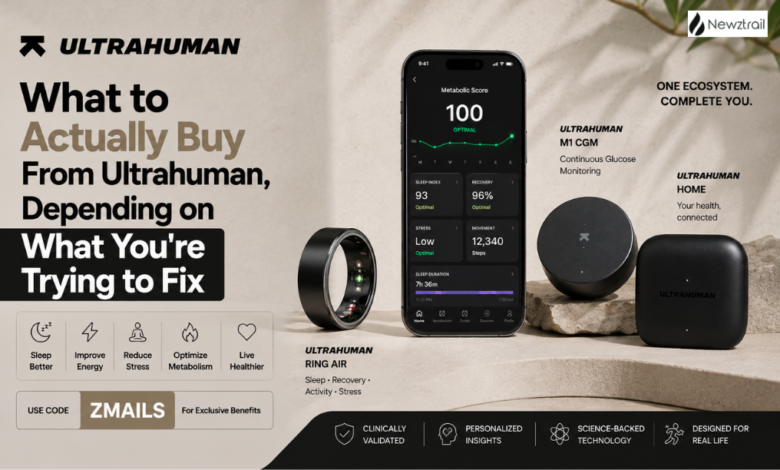
Walking into the Ultrahuman ecosystem for the first time can feel a little overwhelming. There’s a ring, a blood test, a glucose monitor, a bedroom sensor, and a whole shop full of accessories, and it’s not immediately obvious where to start. So instead of listing everything at once, it makes more sense to think about it the way most people actually approach it — by starting with whatever specific thing has been bothering them, and building outward from there.
If Sleep Is the Problem, Start With the Ring and Work Outward
If you’ve been waking up tired without really knowing why, the Ring AIR or the newer Ring PRO is the obvious starting point. Ring AIR built its reputation as one of the most comfortable sleep trackers available, precisely because it’s light enough to forget you’re wearing it, which matters enormously for something that needs to sit on your finger every night without bothering you. Ring PRO takes that further as the newest, most capable version in the lineup, built specifically around sharper recovery and readiness insights.
Once you’ve got a baseline from the ring, Ultrahuman Home is the natural next step if sleep is still not clicking the way it should. Rather than tracking you directly, it monitors the actual air quality, light, and sound in your bedroom, which is often the missing piece when someone’s sleep score looks fine on paper but they still wake up groggy. Pairing the two means you’re not just seeing that you slept poorly — you’re seeing why, whether that’s a stuffy room, too much ambient light, or noise disrupting your deeper sleep stages without you even realizing it.
If light exposure specifically feels like part of the problem, the Faraday Series blue light blocking glasses are worth adding into the mix. The night version is built to be worn from sunset through to bedtime, cutting down on the kind of screen exposure that tends to delay natural sleepiness, while the day version is designed for daytime wear to reduce general eye strain. And for anyone who needs a genuinely dark room to sleep well, the Blackout Sleep Mask rounds out the sleep-focused setup nicely, built with an ergonomic design specifically so it doesn’t dig into your face the way cheaper masks tend to.
If You’re Trying to Understand Your Energy Levels, Look at Metabolism
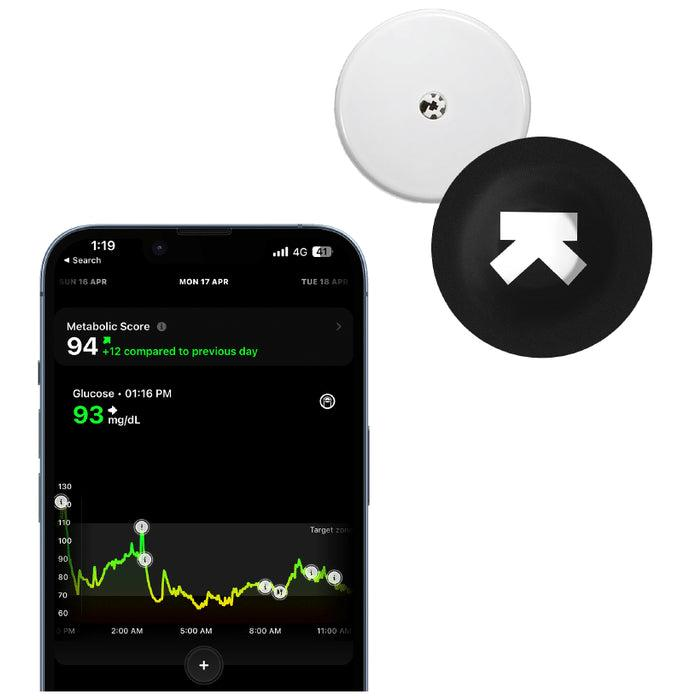
A lot of people chase vague energy problems for years without ever getting a clear answer, and this is exactly where the M2 Live continuous glucose tracking system earns its place. Because it doesn’t require a prescription, it’s genuinely accessible to anyone curious about how their body responds to specific meals, workouts, or stress, rather than being locked behind a doctor’s referral. Watching your glucose respond in real time to a particular breakfast or a stressful meeting is the kind of feedback that tends to change habits far faster than reading a general nutrition guide ever could.
There’s flexibility in how you commit to it too, with both a one-time purchase option for a focused window of learning and a subscription path for anyone who wants ongoing metabolic insight built into their daily routine long-term. Combined with the ring’s recovery and readiness data, you start to see a much fuller picture of why some days feel effortless and others feel like a struggle from the moment you wake up.
If You Want a Full Picture of Your Health, Blood Vision Fills in the Gaps
The ring and the glucose monitor are both excellent at tracking what’s happening day to day, but Blood Vision is where you get a genuinely deeper look under the surface. It covers a wide-ranging panel of biomarkers, and instead of leaving you to interpret a confusing lab report on your own, it translates the results into insights that actually connect back to the rest of your Ultrahuman data. If your ring has been flagging inconsistent recovery for weeks and you can’t figure out why, this is often the tool that finally explains it.
Even if you’ve already had bloodwork done elsewhere, Vision Cloud is worth using on its own. It’s a free, universal report interpreter that works regardless of which lab or provider ran your original test, which means you don’t have to already be a Blood Vision customer to get value out of understanding your own numbers properly.
If You’re Tracking Your Cycle, the Ring Gets Noticeably Smarter
For anyone focused on reproductive health, the Cycle & Ovulation Pro PowerPlug is genuinely worth activating. Rather than relying on self-reported symptoms or a basic calendar guess the way a lot of standalone period-tracking apps do, it uses the ring’s continuous physiological data to build a far more accurate picture of where you actually are in your cycle. Paired with the broader Women’s Health section of the app, it turns the ring from a general wellness device into something genuinely tailored to a part of health that a lot of wearables treat as an afterthought.
If You Care About Recovery and Performance, the PowerPlugs System Is Where to Look
This is one of the more underrated parts of the ecosystem. The Cardio Adaptability PowerPlug specifically breaks down how your heart responds to activity, stress, and rest each night, which goes well beyond a generic daily readiness number. For anyone training seriously, whether that’s for a race, a sport, or just general fitness, understanding how your cardiovascular system is actually adapting night over night is far more useful than just knowing you slept a certain number of hours.
Because PowerPlugs are software-based rather than physical add-ons, the ring you already own keeps getting more capable as new ones roll out, which means your original purchase isn’t a fixed snapshot in time. It keeps evolving instead of becoming outdated the moment something new launches.
If You’re Serious About Recovery, Photon Is Worth Adding

The Ultrahuman Photon is a precision red light therapy device built specifically for deep muscle recovery, and what makes it stand out is the personalized daily plan behind it rather than a generic one-size-fits-all session. For anyone already tracking recovery through the ring, adding an active recovery tool like this rather than just passively waiting for the body to catch up on its own is a natural next step once you understand your own patterns well enough to know when you actually need it.
Protecting the Investment With UltrahumanX
Once you’ve built out a setup you actually rely on daily, the UltrahumanX membership becomes genuinely worth considering. It covers damage, loss, and theft protection across your Ultrahuman devices, along with priority customer support, which matters a lot for something as small and easy to misplace as a ring. Anyone who’s ever lost a wireless earbud or cracked a device screen knows exactly how quickly that kind of accident can happen, and having real protection built directly into the ecosystem removes a genuine source of anxiety around owning gear you actually use every single day.
It’s also worth checking whether your HSA or FSA account can be applied toward a purchase here, since that eligibility effectively lowers what you’re actually paying out of pocket if you already have those funds set aside. It’s a detail that’s easy to miss but genuinely worth factoring into the decision, especially for the higher-investment pieces like the ring or Blood Vision testing.
Building the Setup That Actually Fits You
The real advantage of shopping through Ultrahuman rather than picking up a single isolated gadget is that everything is designed to build on everything else. Start with the ring, and the sleep, recovery, and readiness data becomes the foundation everything else layers onto. Add glucose tracking, and suddenly your energy patterns make sense in a way they never did before. Add Blood Vision, and the picture gets even more complete. None of it requires committing to the whole ecosystem on day one — it’s built so you can start with whatever’s bothering you most right now and expand naturally as new questions come up.
If there’s one specific thing about your health you’ve been trying to understand for a while, whether that’s poor sleep, low energy, recovery that never quite catches up, or a cycle that’s always felt unpredictable, there’s a genuinely good chance the right starting point is already sitting in this catalog, ready to give you an actual answer instead of another guess.
It’s also worth pointing out that none of this requires becoming a data-obsessed person to actually benefit from it. The app is built to surface the insights that matter without demanding you become an amateur scientist just to understand your own readiness score in the morning. You don’t need to interpret raw heart rate variability numbers or dig through spreadsheets to get value here — the whole point of the ecosystem is that it does that translation work for you, turning raw physiological signals into plain, actionable guidance you can actually use that same day. For anyone who’s tried a wearable in the past and given up because the data felt overwhelming or disconnected from anything useful, this is a genuinely different experience, and it’s part of why so many people who start with just the ring end up expanding into the rest of the ecosystem over time rather than letting the device sit forgotten in a drawer after the first few weeks.