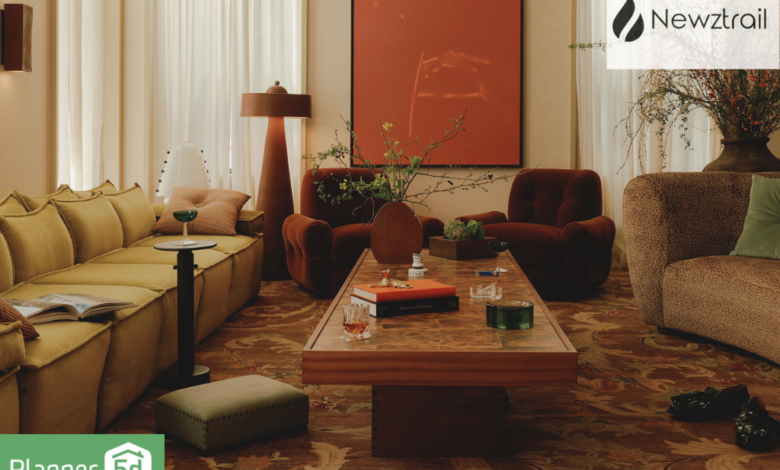
Imagine stepping into your home and seeing a space that feels aesthetic & deeply personal, one that looks like it belongs in a design magazine yet tells your story. As the trends of home design are evolving fast, staying ahead means more than picking a pretty sofa. It’s about weaving in texture, colour, warmth, utility, and a sense of identity. With tools like Planner 5D at your fingertips, you can explore these current & innovative decorating ideas by virtually testing layouts, materials, and moods before committing. Let’s dive into six decorating trends that are shaping the future of home design, and how you can bring them to life in your own space.
Trend 1: Warm “Earthy” Neutrals and Natural Materials
One major shift in home design is moving away from stark whites and cold greys toward richer, more grounded palettes. According to specialists, the trend for earthy neutrals like terracotta, sage, ochre and warm beiges is growing.
Natural wood, stone and materials that show texture and patina are rising in popularity. This combination brings warmth and longevity to a space.
With Planner 5D, you can experiment by swapping out finishes: try a terracotta accent wall, pair it with a wooden floor texture and perhaps a plush jute rug. The visualisation helps you see how the tones interact and whether the warmth suits your space. The key is layering neutrals, not going flat—so add woven textures, visible grain and subtle contrast.
How to apply it:
- Use a base of warm neutral tones for big surfaces (walls, floors)
- Add natural-material accents (wood beams, stone features)
- In Planner 5D: experiment with “material” options and lighting settings to see how warm tones glow at different times of day
- Avoid making the space feel flat: mix light & mid-tones + texture.
Trend 2: Maximal Layers & Personalised Design
For years, minimalism dominated interior design with clean lines, neutral colours, and following the principle of “less is better.” However, 2025 is seeing a vibrant return to maximalism and deeply personalised design. This trend celebrates individuality, creativity, and emotional connection within the home. Instead of removing, we can add more layers, colours, art, and textures that tell our unique story.
Maximal layering isn’t about clutter; it’s about curation. The key is to mix patterns, materials, and eras in a way that feels intentional. Imagine a vintage rug paired with a modern velvet sofa, walls featuring eclectic artwork, and shelves filled with meaningful mementos. Designers note that bold colour combinations such as emerald green, deep blue, mustard, and coral are making a strong comeback. When balanced properly with neutral anchors, they bring depth and personality to a room.
Textures also play a vital role in maximalist spaces. Velvet, silk, linen, and boucle fabrics add dimension and richness. Wallpaper is re-emerging, too, often with botanical or abstract prints that express creativity. In lighting, statement chandeliers and artistic lamps enhance visual drama.
Planner 5D makes it easy to experiment with maximalist ideas without fear of mistakes. You can layer digital décor, swap bold patterns, adjust colours, and visualise the interplay between statement pieces. Test combinations until you achieve a balanced yet expressive atmosphere.
Trend 3: Curves, Arches and Organic Forms
Straight lines and sharp edges are slowly being replaced by soft, flowing shapes that feel more natural and comforting. In 2025, curved furniture, arched doorways, and organic forms are becoming the heart of modern interiors. Rounded sofas, circular tables, and gently curved walls add a sense of movement and warmth to any room. These shapes make spaces feel more welcoming, relaxing, and visually balanced with a refreshing change from rigid, boxy designs.
This design shift is inspired by nature, where curves are everywhere, from rolling hills to flowing water. Incorporating these organic lines into your home brings a calm and harmonious vibe. Even small touches, like a round mirror, arched bookshelf, or oval rug, can soften the overall look and make a big difference.
With Planner 5D, experimenting with curves is easy and fun. You can add arched windows, curved furniture, or rounded walls to your digital layout and instantly see how the space feels. Try adjusting the size, placement, or lighting to explore different moods. The tool helps you find the perfect balance between soft, organic shapes and modern functionality.
How to apply it:
- Include at least one main curved feature, like an arch or round doorway.
- Choose furniture with rounded edges or curved backs.
- In Planner 5D, use wall-shaping tools or curved furniture options to create flow.
- Mix curves with a few straight lines to keep the design balanced and elegant.
Trend 4: Handcrafted Textures & Sustainable Touch-Points
Design trends indicate a strong interest in authenticity: handcrafted textures (wovens, hammered metals, matte glazing, natural fibres) and sustainability are front-of-mind. Home-owners increasingly want pieces that feel human-made not mass-produced, and materials that age gracefully. This ties into the “feel” of space, not merely looks.
In Planner 5D you can apply a material map to surfaces: try linen curtains, jute carpets, metal fixtures with a matte finish, reclaimed-wood surfaces. You’ll see how light and shadow play on texture, helping you pick pieces that feel tactile rather than flat.
How to apply it:
- Use natural fibres (linen, wool, jute) in textiles
- Choose metals with warm finishes (aged brass, bronze) rather than chrome
- In Planner 5D: toggle material shaders and set up realistic lighting to preview texture depth
- Think long-term: sustainable fabrics and handcrafted items may cost more, but they age well.
Trend 5: Digital Designing & Virtual Planning
As home decorating trends change, the tools we use to design are also evolving. Today, digital interior design has become a trend of its own. Instead of imagining how your home might look, you can now see it in detail before making any decisions. With a tool like Planner 5D, you can easily visualise layouts, test colours, materials, furniture, and lighting — all in one place. This makes designing faster, smarter, and far more creative.
Planner 5D allows you to explore endless ideas without risk. Want to see how curved furniture looks with earthy tones or handcrafted textures? You can do it instantly. You can walk through your design virtually, adjust lighting for day and night, and even resize furniture to fit perfectly. This hands-on approach helps you plan confidently while saving time and money in real life.
Whether you’re redesigning a single room or your entire home, Planner 5D makes it simple to bring your vision to life. You can create multiple design versions, compare them, and make changes until every detail feels just right.
How to apply it:
- Start by creating a rough floor plan of your room in Planner 5D.
- Choose a theme or mood board, such as “warm neutrals with modern curves.”
- Use the material library to add realistic textures, patterns, and finishes.
- Design 2–3 layout options (e.g., relaxing lounge vs. functional guest room).
- Review and refine your designs until you’re completely satisfied.
Why These Trends Matter for the Future
These decorating trends highlight how our idea of “home” is changing. People today want spaces that feel warm, personal, and practical, not just stylish. The focus has shifted from cold minimalism to homes that tell a story that is filled with natural textures, meaningful items, and flexible layouts that fit modern lifestyles. Comfort, creativity, and authenticity are now at the heart of interior design.
Another big change is how technology supports this creativity. With digital design tools like Planner 5D, anyone can plan and visualise a space before making real-life decisions. You can explore colour palettes, test layouts, and try furniture arrangements without any guesswork. This not only saves money but also helps you design with confidence.
These trends show that the future of home design is about freedom and experimentation. The digital tools empower people to bring professional-level ideas to life easily.
FAQs
1. What are “earthy neutrals” in home decorating?
Earthy neutrals refer to colour tones that mimic natural materials and landscapes—such as terracotta, muted sage, ochre, warm beige, soft browns. They ground a space and add warmth, as opposed to stark whites or cold greys.
2. Why are curves and arches trending in furniture and architecture?
Curved forms add softness, visual comfort and a sense of flow. They break away from harsh straight lines, creating more approachable, organic spaces. According to trend reports, rounded furnishings and arches are key for 2025 interiors.
3. How can I use Planner 5D to test layering textures and patterns?
In Planner 5D you can select different materials for walls, floors and furniture, apply fabrics and textures, change lighting settings to see effect, and create alternative layouts. That lets you preview how layering (texture, pattern, colour) will look before buying.
4. What does “multi-functional living space” mean in practice?
It means designing a room that adapts to multiple uses—e.g., a lounge that becomes a home office or guest area. The furniture, layout and materials all support shifting functions. The trend reflects more fluid lifestyles.
5. Are these decorating trends just for new homes, or can they work in older homes too?
They absolutely can work in older homes. Many trends such as warm textures, natural materials, layering, curves and personal expression can complement historic architecture. Using tools like Planner 5D allows you to visualise how these elements integrate with your existing structure (doors, windows, beams) before committing.